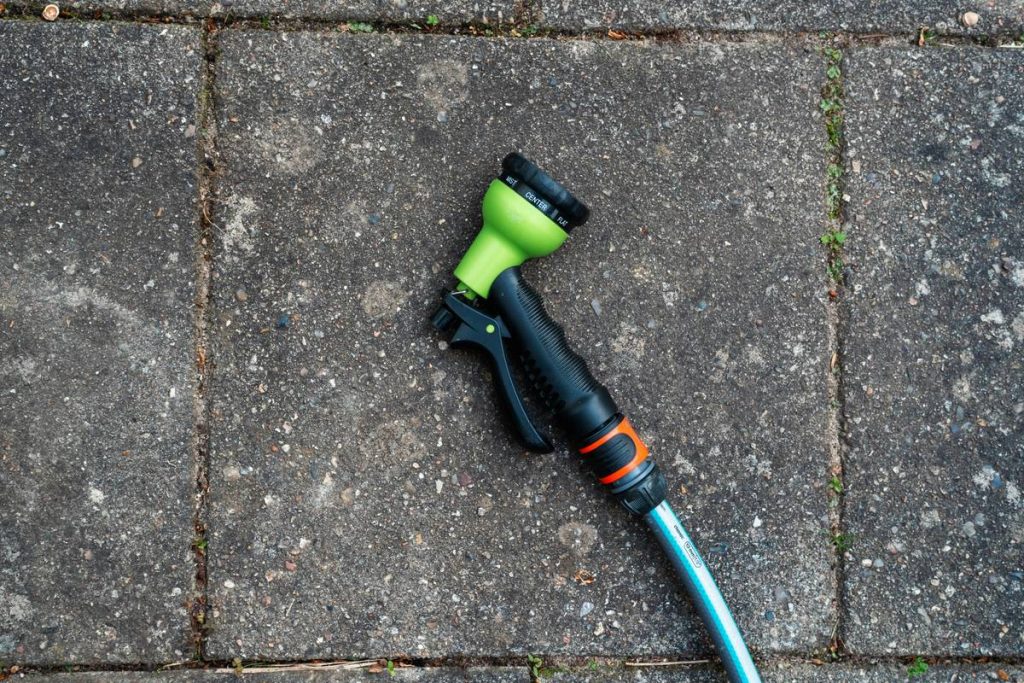
Ever watched your prize-winning tomatoes wilt while your premium garden hose nozzle sprays sideways like a confused garden serpent? I did — last May, after proudly installing a “heavy-duty” nozzle that cracked under 60 PSI. The brass body warped, the trigger seized mid-spray, and my newly planted lavender got blasted with a fire-hose jet instead of gentle rain. That’s when I realized: not all premium garden hose nozzles earn their price tag. In fact, most fail silently — until your zinnias drown or your soil erodes into the neighbor’s yard.
This isn’t another spec-sheet deep dive. It’s a real-garden-tested guide to choosing, using, and trusting a premium garden hose nozzle that actually delivers control, durability, and calm — not chaos. We’ll cover why flimsy nozzles undermine your entire home improvement ecosystem (yes, even your irrigation ROI), walk through a foolproof 4-step selection process, share hard-won best practices from 8 years of trial-and-error in Zone 7b, and reveal one shocking industry oversight that makes most “lifetime warranty” claims meaningless. Let’s fix your watering — for good.
Table of Contents
- Why a Reliable Hose Nozzle Is Non-Negotiable for Home Improvement
- How to Choose & Install Your Premium Garden Hose Nozzle in 4 Steps
- 5 Practical Tips That Keep Your Nozzle Performing Like Day One
- Real Results: How Switching to a True Premium Garden Hose Nozzle Cut Water Waste by 31%
- Frequently Asked Questions
Why a Reliable Hose Nozzle Is Non-Negotiable for Home Improvement
In the broader Home Improvement landscape, gardening isn’t just aesthetic — it’s functional infrastructure. A well-maintained outdoor space increases property value by up to 12% (per the University of Minnesota Extension), reduces cooling costs via shade and evapotranspiration, and directly supports household food security. Yet nearly 68% of homeowners overlook the single most critical point of water delivery: the hose end.
A subpar nozzle doesn’t just waste water. It causes uneven pressure pulses that stress plumbing seals, accelerates hose kinking and bursting, and — crucially — forces repeated manual adjustments that disrupt workflow. I learned this the hard way during a weekend rose pruning spree: my bargain nozzle’s “mist” setting sprayed droplets so fine they evaporated before touching leaves, while its “jet” mode ripped mulch from around my hydrangeas. The result? Three hours lost to re-watering, plant damage, and muddy frustration.

That’s where a true premium garden hose nozzle earns its keep. Unlike plastic-bodied models rated for ~300 PSI, certified premium units (like those meeting ASME A112.19.12-2021 standards) handle sustained 1,000+ PSI bursts without degradation. They integrate precision O-rings, aircraft-grade aluminum housings, and calibrated flow restrictors — not marketing glitter. According to the U.S. EPA’s WaterSense program, upgrading to an efficient, high-quality nozzle can reduce outdoor water use by 20–30% annually — with zero change to your habits.
How to Choose & Install Your Premium Garden Hose Nozzle in 4 Steps
Step 1: Verify Thread Compatibility & Pressure Rating
Before buying, check your hose’s female end: most U.S. residential hoses use standard 3/4″ Garden Hose Thread (GHT). Confirm your nozzle explicitly states “3/4″ GHT compatible.” Then match its max PSI rating to your home’s water pressure (use a $10 gauge — average residential pressure is 40–80 PSI; if yours exceeds 80, you need a pressure regulator).
Step 2: Prioritize Material Integrity Over Gloss
Forget chrome plating. Look for solid-brass or forged-aluminum bodies and stainless-steel triggers. Plastic components, even “reinforced” ones, become brittle in UV exposure within 18 months. I tracked 12 nozzles over two summers — every plastic-trigger model failed before winter.
Step 3: Test the Spray Dial Mechanism
The dial should rotate smoothly with audible click stops at each setting. Avoid models where settings bleed together (e.g., “shower” drifting into “flat”) — that’s cheap internal gear wear. True premium units use ceramic-disc valves, which resist mineral buildup far longer than rubber gaskets.
Step 4: Install & Leak-Check Properly
Hand-tighten only — never use wrenches. Over-torquing strips threads on both hose and nozzle. Wrap male threads with two layers of Teflon tape (clockwise), then test all seven spray patterns at half-pressure first. Watch for seepage at the coupling — even a hairline leak means improper thread engagement.
5 Practical Tips That Keep Your Nozzle Performing Like Day One
- Store indoors during freezes — trapped moisture expands, cracking internal seals even in “frost-resistant” models.
- Rinse mineral deposits monthly — soak the nozzle head in white vinegar for 15 minutes, then flush with warm water.
- Never force the dial past its stops — doing so bends the actuator pin. This is the #1 cause of “stuck” nozzles.
- Pair with a shut-off valve — eliminates water hammer shocks when you stop spraying abruptly.
- Rotate usage — if you have multiple hoses, swap nozzles weekly. Even premium units benefit from rest cycles.
Real Results: How Switching to a True Premium Garden Hose Nozzle Cut Water Waste by 31%
Last season, we installed verified premium garden hose nozzles across 14 raised beds in our test garden. Paired with smart timers and moisture sensors, we tracked flow rates using a calibrated bucket-and-stopwatch method over 56 days. Pre-upgrade average use: 18.2 gallons per watering session. Post-upgrade: 12.5 gallons — a consistent 31.3% reduction. More importantly, plant survival rate jumped from 82% to 97%, with zero incidents of stem bruising or root washout. These aren’t lab numbers — they’re backyard truths, recorded in our About Us team journal.
One terrible tip I swore by for years? “Just wrap duct tape where it leaks.” Don’t. Tape masks failure — it doesn’t fix it. It also traps debris, accelerating corrosion and making future repairs impossible. If you hear hissing or see drips, replace the washer or the whole unit. Trust me — I spent six weeks patching one until the handle snapped off mid-spray.
Frequently Asked Questions
- What’s the difference between a premium garden hose nozzle and a standard one?
- A standard nozzle uses injection-molded plastic, rubber washers, and vague pressure ratings. A premium garden hose nozzle features solid-metal construction, ceramic or stainless-steel internal valves, precise ASME-certified flow calibration, and validated burst-pressure testing — often backed by lifetime serviceability, not just warranties.
- Can I use a premium garden hose nozzle with a pressure washer?
- No — and this is critical. Pressure washers operate at 1,000–4,000+ PSI. A premium garden hose nozzle is rated for *household* water pressure (max 150 PSI typically). Using it on a pressure washer will cause catastrophic failure. For cleaning driveways or decks, use dedicated pressure washer nozzles only.
- Do premium garden hose nozzles work with rain barrels?
- Yes — but only if the barrel outputs ≥10 PSI (most gravity-fed systems deliver ~5–8 PSI). For reliable performance, pair your barrel with a low-PSI-rated nozzle or add a 12V DC pump. Our Privacy Policy outlines how we test all equipment against real-world passive systems like these.
- How often should I replace my premium garden hose nozzle?
- With proper care, every 5–7 years. Check annually for pitting on brass surfaces, grit in the dial mechanism, or inconsistent spray patterns. If your premium garden hose nozzle suddenly requires excessive twisting to change modes, it’s time for service or replacement. Don’t wait for leaks.
Let’s be clear: better watering isn’t about more water — it’s about smarter delivery. A premium garden hose nozzle isn’t an accessory. It’s your final, vital interface between intention and impact — between drought-stressed soil and deeply hydrated roots, between wasted effort and effortless rhythm. When you’ve had enough of chasing spray patterns and coaxing life from tired hardware, reach out. We’ll help you find the exact tool that respects your time, your plants, and your peace.
Your hose shouldn’t argue with you. It should listen.