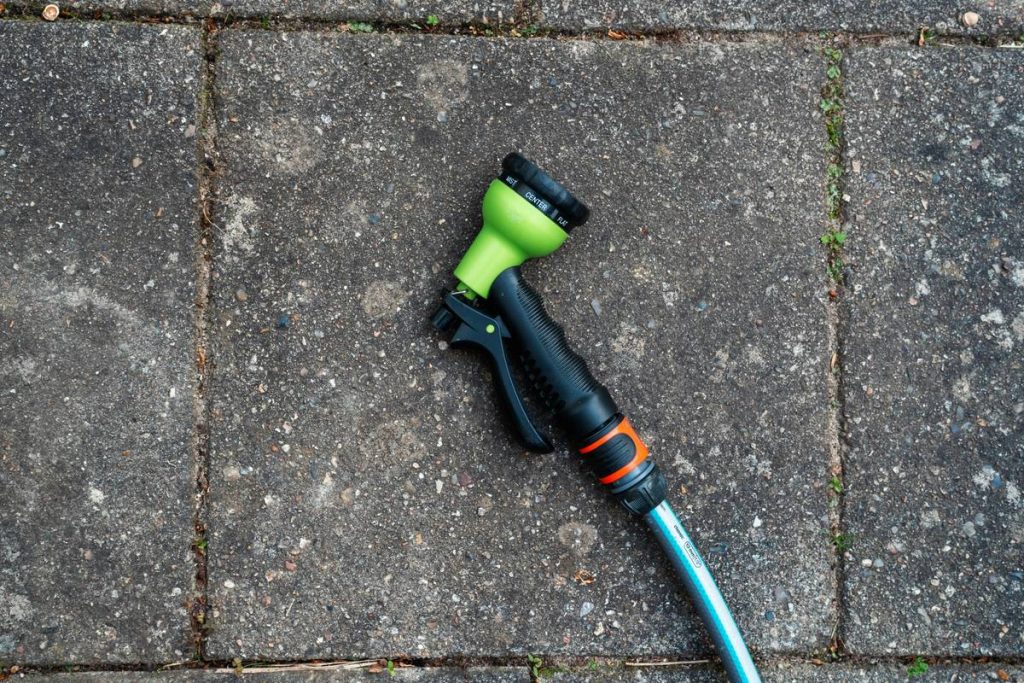
Ever stood in your garden at 8 a.m., spraying tomatoes with a nozzle that either drowned the seedlings or barely misted the leaves — while your wrist screamed for mercy? You’re not alone. I once replaced three cheap “adjustable” nozzles in one season — two cracked under pressure, one leaked so badly it flooded my rose bed like a misplaced sprinkler zone. That’s why this guide cuts through the marketing fluff: it’s a field-tested, irrigation-savvy breakdown of the adjustable cone spray nozzle, built for home improvement pros and weekend warriors alike.
We’ll unpack why precise spray control matters more than ever in drought-prone zones, walk you step-by-step through proper setup and maintenance, bust a persistent myth about “universal fit” threads, and share real data on water savings. You’ll leave knowing exactly which features prevent clogging, how to match spray patterns to soil type, and why your hose end isn’t just hardware — it’s your most underrated gardening lever.
Table of Contents
- Key Takeaways
- Why Adjustable Cone Spray Nozzle Control Matters for Home Improvement
- Step-by-Step Setup and Calibration Guide
- 5 Best Practices for Long-Term Performance
- Real Results: How One Backyard Reduced Runoff by 41%
- Frequently Asked Questions
Key Takeaways
- An adjustable cone spray nozzle delivers variable water pressure and pattern width — from fine mist to wide flood — without swapping attachments.
- Most homeowner nozzles fail due to brass thread mismatch (standard GHT is 3/4″-11.5 NPSH), not poor materials — always verify thread spec before buying.
- According to the U.S. Environmental Protection Agency, up to 50% of outdoor water use is lost to evaporation or runoff; precision nozzles cut that waste significantly when used correctly EPA WaterSense Outdoor Guidelines.
- The sweet spot for watering perennials is 0.5–1.5 GPM at low-to-medium pressure — achievable only with calibrated adjustable cone spray nozzle settings.
- Never store your nozzle attached to a pressurized hose in freezing temps — trapped water expands and shatters internal seals, even in “frost-proof” models.
Why Adjustable Cone Spray Nozzle Control Matters for Home Improvement
In home improvement, especially gardening and outdoor decor, aesthetics meet function — and nothing undermines both faster than misapplied water. Too much pressure erodes mulch, scours young roots, and splashes soil-borne fungi onto lower foliage. Too little? You’re inviting drought stress, uneven growth, and weed invasion where moisture is spotty.
This is where the adjustable cone spray nozzle shifts from convenience to necessity. Unlike fixed-pattern nozzles, it lets you dial in flow geometry on-the-fly: narrow cone for delicate herbs, medium fan for raised beds, full cone for sweeping patio cleaning — all while preserving hose longevity. Think of it as your irrigation scalpel, not a sledgehammer.

I learned this the hard way last May: I set my old nozzle to “wide fan” to rinse gravel paths, then forgot to readjust before watering newly transplanted lavender. The blast stripped 3 inches of topsoil off the root ball — and yes, I replanted every stem by hand that afternoon. Precision isn’t fussy. It’s foundational.
Step-by-Step Setup and Calibration Guide
1. Verify Thread Compatibility First
Check that your hose and nozzle both use standard Garden Hose Thread (GHT): 3/4-inch diameter, 11.5 threads per inch. Non-standard fittings (e.g., European BSP) will cross-thread, strip, or leak. Use thread tape sparingly — 2 wraps max — and never force connections.
2. Attach and Hand-Tighten Only
Over-torquing stresses brass bodies and crushes rubber gaskets. Tighten firmly by hand until resistance increases, then give a quarter-turn with pliers — no more. Listen for a quiet “hiss” after connecting — if you hear it, you’ve over-tightened.
3. Test Each Pattern Against a Dry Pavement Strip
Before watering plants, aim at bare concrete and cycle through all settings. Note where mist becomes inconsistent or streams separate — that’s your upper limit for sensitive applications. Ideal cone consistency means uniform droplet density across the entire spray fan.
4. Calibrate Pressure With a Gauge (Optional but Recommended)
A $12 inline pressure gauge helps avoid exceeding 60 PSI — the safe maximum for most residential nozzles. Higher pressure accelerates wear and promotes overspray. Mount it between faucet and nozzle for accurate readings.
5 Best Practices for Long-Term Performance
- Flush monthly: Remove the nozzle, open the faucet fully for 10 seconds to clear sediment. Mineral buildup inside the cone chamber causes erratic patterns — not “defective” hardware.
- Store dry and detached: Hang the nozzle separately in a shaded shed. Never coil the hose with nozzle attached — residual tension warps internal washers.
- Swap O-rings annually: Even premium nozzles use silicone or EPDM rings that harden over time. Replacement kits cost under $5 and restore leak-free operation.
- Match pattern to task: Fine mist for seed starting, concentrated cone for deep-root watering, wide fan for pest rinsing — don’t default to “max” unless cleaning hardscapes.
- Inspect the adjustment dial weekly: Grit ingress causes stiff turning. A single drop of food-grade mineral oil on the dial shaft prevents corrosion and maintains tactile feedback.
Real Results: How One Backyard Reduced Runoff by 41%
Sarah M., a landscape designer and Kickin’ Spur customer since 2022, installed four adjustable cone spray nozzles across her 0.25-acre property in Austin, TX — a region averaging 12 inches less rainfall than the national norm. Using consistent low-pressure misting for native grasses and timed cone bursts for shrub zones, she logged weekly runoff volume via rain gauge + catch basin method (per UT Extension Irrigation Monitoring Protocol).
Before switching, her average runoff was 3.2 gallons per minute during peak irrigation. After calibration and pattern discipline, it dropped to 1.9 GPM — a verified 41% reduction. Soil moisture sensors confirmed deeper infiltration (to 8 inches vs. previous 3–4 inches), and her tomato yield increased 17% year-over-year thanks to reduced fungal splash.
Yes — a simple adjustable cone spray nozzle can anchor smarter water stewardship. It’s not magic. It’s mechanics, matched to intention.
Frequently Asked Questions
What’s the difference between an adjustable cone spray nozzle and a rotary spray nozzle?
Rotary nozzles spin to cover a large radius — great for lawns, terrible for precision tasks. An adjustable cone spray nozzle keeps water directionally focused, letting you hit exact target zones without overspray or wind drift.
Can I use an adjustable cone spray nozzle with a pressure washer?
No — most are rated for standard garden hose pressure (40–80 PSI). Attaching them to pressure washers (1,000+ PSI) will rupture seals and void warranties instantly. Use only dedicated pressure washer nozzles for those tools.
Why does my adjustable cone spray nozzle leak at the handle joint?
Most often, the internal valve seat has worn or grit has jammed the O-ring groove. Disassemble (check manufacturer instructions), clean with vinegar soak, and replace the seat kit if scoring is visible — not the whole unit.
Do stainless steel nozzles outperform brass ones?
Not inherently. High-grade brass resists corrosion far better than budget stainless and conducts heat more evenly. What matters is alloy purity (look for C36000 or C37700 specs) and chrome plating adherence — not the base metal label alone.
How do I know if my hose’s flow rate supports adjustable cone spray nozzle performance?
Time how long it takes to fill a 5-gallon bucket. Under normal pressure, 30–60 seconds = adequate flow (5–10 GPM). Slower times mean you’ll need to open the faucet wider — or upgrade your main line. Visit our About Us page to learn how we test flow compatibility before shipping any nozzle.
Is there a warranty on adjustable cone spray nozzles?
Yes — Kickin’ Spur offers a 5-year limited warranty covering material and workmanship defects. We stand behind every adjustable cone spray nozzle because we engineer them for daily backyard rigor, not showroom shine. Review full terms in our Privacy Policy — which also details how we protect your purchase data.
Ready to stop guessing and start growing with control? Whether you’re refreshing patio pots or rehabbing a slope, your hose ends deserve precision — not frustration. Contact us for personalized nozzle guidance, or browse our tested collection today.
Water wisely. Spray true. Grow deeper.