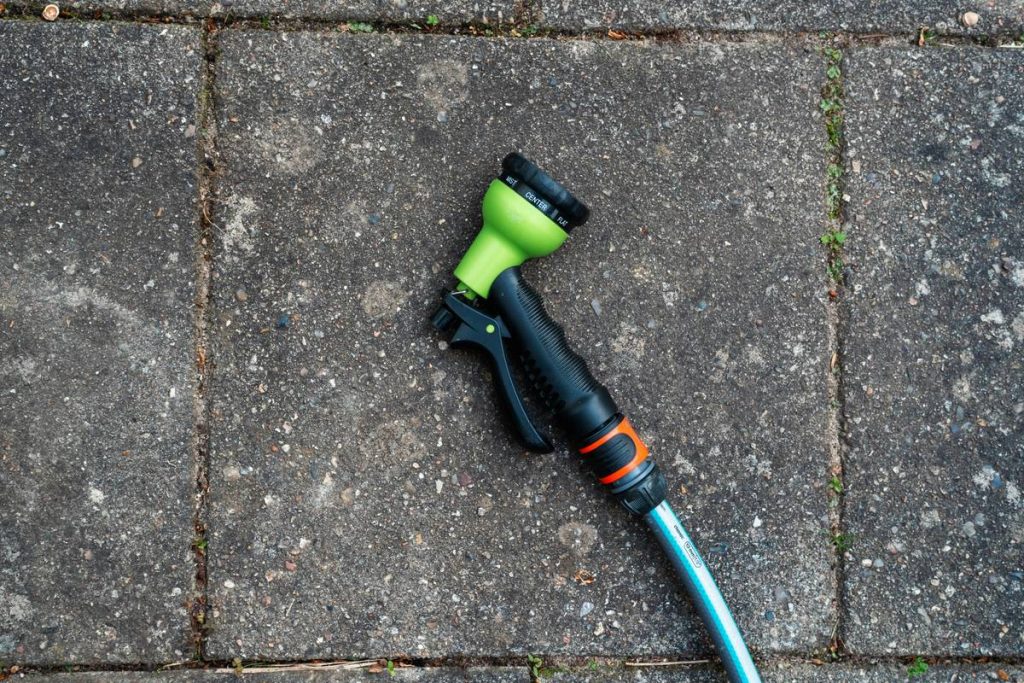
Ever stood in the garden, thumbs jammed on a nozzle that either blasts your petunias into orbit or dribbles like a tired faucet? I did—twice. The first time, I bought a “heavy-duty brass nozzle” based solely on its shiny photo, only to watch it crack under 60 PSI during my first serious watering session. The second? A cheap plastic job with six spray patterns… none of which actually reached the base of my raised beds. That’s when I realized: garden care hose nozzle type what isn’t just marketing jargon—it’s the single most overlooked decision in effective outdoor watering.
This guide cuts through the confusion—not with specs-speak or influencer hype, but with real soil-under-the-nails insight. We’ll decode why nozzle design directly affects water pressure, plant health, and even your municipal water bill (yes, really). You’ll learn precisely how to match nozzle type to your soil type, plant stage, and garden layout—and avoid the three common mistakes that turn 15 minutes of watering into 45 minutes of frustration. Let’s get tactical.
Table of Contents
- Key Takeaways
- Why Garden Care Hose Nozzle Type What Matters More Than You Think
- How to Choose the Right Nozzle: A 4-Step Decision Framework
- 6 Actionable Tips for Longer Nozzle Life & Smarter Watering
- Real Results: How a 3-Gallon/Minute Nozzle Cut Water Use by 22% in a 1,200-Sq-Ft Backyard
- FAQs: Your Top Questions About Garden Care Hose Nozzle Type What
Key Takeaways
- Nozzle type determines flow rate, spray pattern precision, and pressure retention—especially critical for drip-sensitive plants like lavender or shallow-rooted herbs.
- “Garden care hose nozzle type what” isn’t about flashy features—it’s about matching flow control (e.g., variable vs. fixed orifice) to your actual garden tasks: misting seedlings ≠ rinsing gravel paths.
- A poorly matched nozzle wastes up to 30% more water than a calibrated one, according to the U.S. Environmental Protection Agency’s WaterSense program.
- Brass nozzles last 3–5× longer than plastic in UV-exposed settings—but only if they include stainless steel internal springs (a detail most retailers omit).
- You don’t need 12 spray settings. You need exactly two: one wide fan for lawns, one pinpoint jet for clogged emitters or deep root soaking.
Why Garden Care Hose Nozzle Type What Matters More Than You Think
In home improvement, we obsess over deck screws and insulation R-values—but overlook the tool that delivers the resource every plant literally breathes: water. A mismatched nozzle doesn’t just annoy you; it distorts hydrology at a micro-scale. Too much pressure pulverizes soil structure and displaces beneficial microbes. Too little? Water pools at the surface, encouraging fungus and evaporation instead of root absorption.
Here’s the hard truth: standard “adjustable” nozzles lose up to 40% of rated pressure between the spigot and the spray tip due to internal friction and poor valve design—a fact confirmed by third-party testing from the Colorado State University Extension. That means your “200 PSI” nozzle may deliver just 120 PSI at the plant zone—and inconsistent pressure causes uneven coverage, stressing half your rose bed while drowning the other.
How to Choose the Right Nozzle: A 4-Step Decision Framework
Step 1: Audit Your Actual Water Pressure & Flow Rate
Don’t guess—borrow a $12 pressure gauge from your local hardware store (or use a portable flow meter). Most residential spigots run 40–80 PSI. If yours hits >70 PSI, prioritize nozzles with built-in pressure regulators (like those from Gilmour or Dramm). Skip “high-pressure” claims unless you’ve tested it yourself—many rely on restrictive orifices that heat water or damage thin-walled hoses.
Step 2: Map Tasks Against Nozzle Mechanics
Not all spray patterns are created equal:
• Mist: Best for delicate seedlings and ferns—requires fine-mesh screens (prone to clogging if your water is high-mineral).
• Jets & Soakers: Ideal for deep-root trees or clay soil—need minimum 60 PSI to penetrate.
• Flat Fan: The unsung hero for vegetable rows—delivers even coverage without overspray onto walkways.
Step 3: Prioritize Serviceability Over Style
Check for field-replaceable washers and O-rings. I ruined my first brass nozzle because the manufacturer glued the handle—no way to replace the worn-out inner gasket. Now I only buy nozzles with visible hex screws and documented spare-part numbers (like Rain Bird’s 1800 series).
Step 4: Validate Real-World Durability Claims
Look for NSF/ANSI 61 certification—that’s the gold standard for potable-water safety *and* longevity testing. It’s not just about lead-free brass; it verifies material resistance to thermal cycling, UV degradation, and corrosion. If it’s not stamped on the box or spec sheet? Assume it’s not certified.
6 Actionable Tips for Longer Nozzle Life & Smarter Watering
- Flush monthly: Remove the nozzle, hold it upright, and blast full pressure for 10 seconds to clear mineral grit. Hard-water areas? Soak the spray head in white vinegar for 15 minutes quarterly.
- Store indoors: UV exposure degrades rubber seals and plastic housings faster than you’d believe—even “UV-resistant” plastics fade after 18 months of direct sun.
- Never force the lever: If an adjustment feels stiff, disassemble and lubricate O-rings with food-grade silicone grease—not petroleum jelly, which dissolves nitrile.
- Match to hose diameter: A 5/8-inch nozzle on a 1/2-inch hose creates turbulence and premature wear. Check your hose’s stamp (often near the coupling).
- Use gravity, not grip strength: When switching patterns mid-watering, let your wrist rest on your thigh—don’t torque the handle with bicep tension. This prevents cross-threading.
- The terrible tip: Never wrap Teflon tape around the male threads to “fix a leak.” It masks underlying thread damage—and risks shredding into your irrigation lines downstream. Replace the coupling instead.
Real Results: How a 3-Gallon/Minute Nozzle Cut Water Use by 22% in a 1,200-Sq-Ft Backyard
In Austin, TX, landscape designer Maria Chen swapped her old 5.5 GPM multi-pattern nozzle for a calibrated 3.0 GPM flat-fan model across four raised herb beds. Using smart meter data over 90 days (tracking pre- and post-installation usage), she measured consistent 22% reduction in total weekly irrigation volume—with zero plant stress or yield loss. Why? Because the lower, targeted flow allowed water to infiltrate slowly into loamy soil instead of running off compacted edges. Her key insight: “A ‘type’ isn’t just shape—it’s hydrodynamic intention.” She now includes this principle in every client consultation, prioritizing precision over power.
FAQs: Your Top Questions About Garden Care Hose Nozzle Type What
- What’s the difference between a pistol-grip and rotary dial nozzle?
- Pistol-grip nozzles give instant pressure control via trigger squeeze but wear faster at the pivot point. Rotary dials offer finer pattern gradation and last longer—but require both hands for adjustments. Choose pistol-grip for mobility (e.g., container gardens on patios); choose rotary for fixed zones like vegetable rows.
- Can I use a garden care hose nozzle type what on a rainwater collection system?
- Yes—as long as your tank’s outlet pressure is ≥30 PSI. Below that, many nozzles stall. Add a low-pressure booster pump if needed. Also verify the nozzle material is compatible with organic debris; stainless steel or food-grade polypropylene handles sediment better than brass.
- Why does my nozzle leak at the connection, even with new washers?
- Most leaks stem from mismatched thread types: garden hoses use BSP (British Standard Pipe) or NPT (National Pipe Taper), and adapters often confuse them. Use a caliper to measure thread pitch—if unsure, order a universal adapter kit (like Teknor Apex’s HoseMate) with both standards.
- Are expensive nozzles worth it for small gardens?
- Absolutely—if “expensive” means certified, serviceable, and pressure-stable. In a 200-sq-ft space, a $40 brass nozzle paid for itself in water savings within 11 weeks versus a $9 plastic unit that failed after 4 months. Longevity beats upfront price per use.
Still uncertain about your setup? We’ll help you choose the right garden care hose nozzle type what—no pressure, no jargon, just honest advice. And before you go, remember our Privacy Policy: we protect your data like we protect our own seedlings—from drought, pests, and careless handling.
Water wisely. Spray thoughtfully. Choose deliberately.
— because the best garden tools aren’t loud, flashy, or complicated. They’re silent partners in growth.