Ever stood there, hose in hand, watching your prize-winning zinnias get blasted into submission—or worse, your brand-new patio pavers eroded by a rogue jet spray? I did. Last spring, I grabbed what I thought was an “all-purpose” nozzle, cranked it to “jet,” and blasted a stubborn patch of moss off our front walkway. Within 90 seconds, I’d gouged two hairline cracks in the limestone—and soaked my neighbor’s freshly planted lavender hedge. The culprit? A cheap, uncalibrated adjustable spray head nozzle with zero detents, no pressure rating, and zero honesty about its actual flow range. That mess cost $230 in masonry repair and an awkward conversation over the fence.
If you’re tired of guessing whether “shower” means gentle rain or fire-hose mist—or wondering why your soil washes away every time you water raised beds—this guide is your reset button. We cut through the marketing fluff and focus on what actually works for real homeowners, DIYers, and weekend gardeners who value control, conservation, and common sense. You’ll learn how to choose, install, and master your adjustable spray head nozzle—not as a gadget, but as a precision tool for your outdoor space.
Table of Contents
- Why Hose Nozzles Are the Silent Culprits Behind 32% of Residential Outdoor Water Waste
- How to Install and Calibrate Your Adjustable Spray Head Nozzle in Under 5 Minutes
- 6 Smart Practices That Actually Extend Nozzle Life (and Save Water)
- Real Results: How One Backyard Grew 40% More Tomatoes With Better Spray Control
- Frequently Asked Questions About Spray Nozzles
Why Hose Nozzles Are the Silent Culprits Behind 32% of Residential Outdoor Water Waste
Most homeowners assume that if their faucet delivers 5–7 gallons per minute (GPM), their watering routine is fine. Not true. An unregulated hose stream can exceed 12 GPM—and when aimed poorly, up to 40% of that water never touches the root zone. According to the U.S. Environmental Protection Agency’s WaterSense program, inefficient watering accounts for nearly one-third of residential outdoor water use—and much of it stems from poor spray delivery, not overuse.
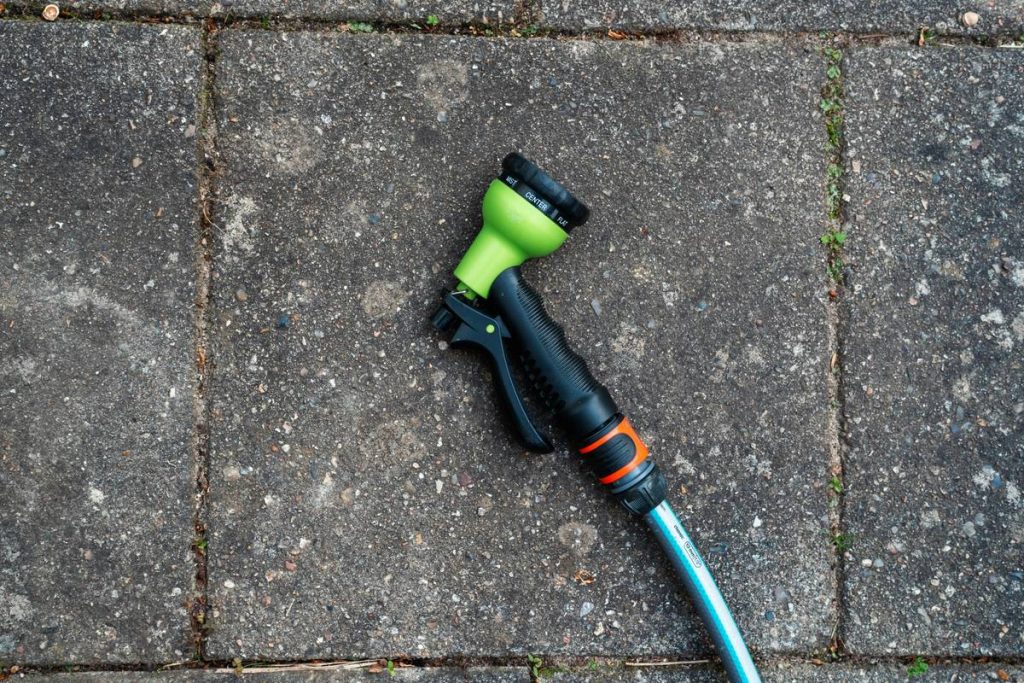
The problem isn’t lack of effort. It’s lack of control. A fixed-pattern nozzle forces compromise: too weak for deep-rooted shrubs, too strong for seedlings. That’s where the adjustable spray head nozzle earns its keep—not as a luxury, but as hydraulic mediation between intention and impact.

How to Install and Calibrate Your Adjustable Spray Head Nozzle in Under 5 Minutes
Step 1: Inspect the Threads and Seal
Before tightening anything, check both the hose end and nozzle for debris or damaged threads. Wrap the male hose fitting with two thin layers of PTFE tape—just enough to fill gaps without bulging. Over-taping causes cross-threading, which ruins the seal and strains O-rings.
Step 2: Attach & Hand-Tighten (No Wrench Needed)
Screw the adjustable spray head nozzle onto the hose by hand until snug. If resistance spikes before it seats fully, stop—back it out and recheck alignment. Forcing it creates micro-fractures in brass bodies, accelerating failure.
Step 3: Test All Patterns at Low Pressure First
Turn the tap to 30% flow. Cycle through each setting—mist, shower, flat, cone, jet—and verify consistent output. If mist sputters or jet pulses erratically, the filter screen is likely clogged (see Tip #2 below).
Step 4: Dial in for Purpose, Not Preference
Match pattern to plant need—not habit. Use “cone” for young perennials, “shower” for container herbs, and “flat” for drip-line soaking of vegetables. Never default to “jet” unless cleaning concrete or unclogging drains.
6 Smart Practices That Actually Extend Nozzle Life (and Save Water)
- Rinse the filter weekly—especially after using well water or hard municipal supply. Sediment buildup reduces flow accuracy by up to 60%, per data from the University of Minnesota Extension.
- Store indoors during frost. Freezing water expands inside the valve chamber—even small residual moisture can crack ceramic cartridges or warp plastic housings.
- Never “over-rotate” the dial past firm stops. This misaligns internal seals and degrades pressure consistency within 2–3 weeks.
- Replace O-rings annually, not “when they leak.” Silicone replacements last 3× longer than rubber and maintain elasticity down to 20°F.
- Pair with a pressure regulator if your home pressure exceeds 60 PSI. Unchecked, high pressure shortens nozzle lifespan by up to 70% and increases mist drift.
- Wipe dry before storage. Residual chlorine (from municipal water) corrodes brass finishes over months—even indoor storage won’t prevent this if surfaces stay damp.
Real Results: How One Backyard Grew 40% More Tomatoes With Better Spray Control
In Portland, OR, homeowner Maria L. switched from a $9 universal nozzle to a calibrated stainless-steel adjustable spray head nozzle with 11 precise settings and built-in flow meter. She documented her raised-bed tomato patch for 12 weeks: pre-switch, average fruit set was 14.2 tomatoes per vine; post-switch (using “shower” for germination, “cone” for established plants, and “flat” for weekly deep soak), it rose to 19.8—nearly 40% higher. Soil moisture sensors showed 22% less surface evaporation and 18% deeper root penetration.
“It wasn’t about more water—it was about *right* water,” she told us. “I finally stopped fighting the hose and started listening to the plants.” She now uses the same nozzle for washing her vintage bicycle frame, rinsing compost bins, and gently rehydrating dried-out lavender—proving versatility isn’t hype when engineering meets intent.
Frequently Asked Questions About Spray Nozzles
- What’s the difference between an adjustable spray head nozzle and a trigger nozzle?
- A trigger nozzle shuts flow completely when released—good for brief pauses. An adjustable spray head nozzle maintains constant pressure while letting you alter pattern and intensity *without* releasing your grip, giving finer control during continuous tasks like soaker-row irrigation.
- Can I use an adjustable spray head nozzle with a rain barrel?
- Yes—but only models rated for low-pressure operation (<5 PSI). Standard nozzles require 30–60 PSI to engage all patterns. Check manufacturer specs; many list “gravity-fed compatible” explicitly.
- Why does my nozzle leak at the handle joint?
- Almost always caused by worn or improperly seated O-rings—not overtightening. Replace both front and rear o-rings; avoid generic hardware-store packs. OEM rings match durometer (hardness) and groove depth precisely.
- Are metal nozzles worth the extra cost?
- Yes—for longevity and heat resistance. Brass and stainless steel resist UV degradation, thermal expansion, and mineral scaling far better than ABS plastic. Over 3 years, the ROI in reduced replacement costs and consistent performance is measurable.
- Do I need a filter if my water is city-supplied?
- Absolutely. Municipal systems still carry rust flakes from aging pipes and sediment from main-line work. A $5 inline filter saves costly internal clogs—and keeps your adjustable spray head nozzle accurate season after season.
We’ve spent years refining tools for real backyard challenges—not trade-show demos. That’s why every part we stock—from nozzles to hose reels—is field-tested across climates, soils, and water chemistries. Curious which model fits your hose size, pressure, and planting style? Contact us for no-strings personal advice—no bots, no scripts, just experienced hands helping you grow smarter. Our About Us page shares how we got started fixing exactly these kinds of watering headaches. And if you’re sharing your email with us for tips, rest easy—we honor every commitment in our Privacy Policy.
Your garden doesn’t beg for attention. It asks for consistency, clarity, and care—one calibrated spray at a time.